
Delaware Family Court Records
Delaware Family Court Records cover divorce, custody, support, adoption, and juvenile cases filed with the Family Court of Delaware. The court runs one location in each of the state's three counties. To search Delaware Family Court Records, you can check the online civil case portal, call the records unit for your county, or visit the courthouse in person. Most family case files are held only at the county where the case was filed. This page walks you through where to look, what to ask for, and how to get copies of Delaware Family Court Records.
Delaware Family Court Records Overview
The Family Court of Delaware
The Family Court is the one court in the state that hears all domestic matters. It holds exclusive jurisdiction over divorce, child custody, child support, adoption, and juvenile cases. Each of the three counties has its own Family Court location. New Castle County runs out of the Leonard L. Williams Justice Center in Wilmington. Kent County sits at 400 Court Street in Dover. Sussex County is at 22 The Circle in Georgetown. Hours are the same across all three: Monday through Friday, 8:30 a.m. to 4:30 p.m. Take a look at the Family Court of Delaware site to confirm times before you go.
The Family Court does not take eFiling yet. All family paperwork must be filed in person at the clerk's office in the county where the case belongs. Staff can help you find the right form but cannot fill it out for you or give legal advice. A Resource Center in each county helps self-represented litigants find forms and basic info. For a general overview of the Delaware court system, see the Delaware Courts information page, which covers all state courts including Superior, Chancery, and the Family Court.
Below is the official state portal that shows where each Family Court sits and how to reach it. You can view the Delaware Courts locations page for full contact details by county.
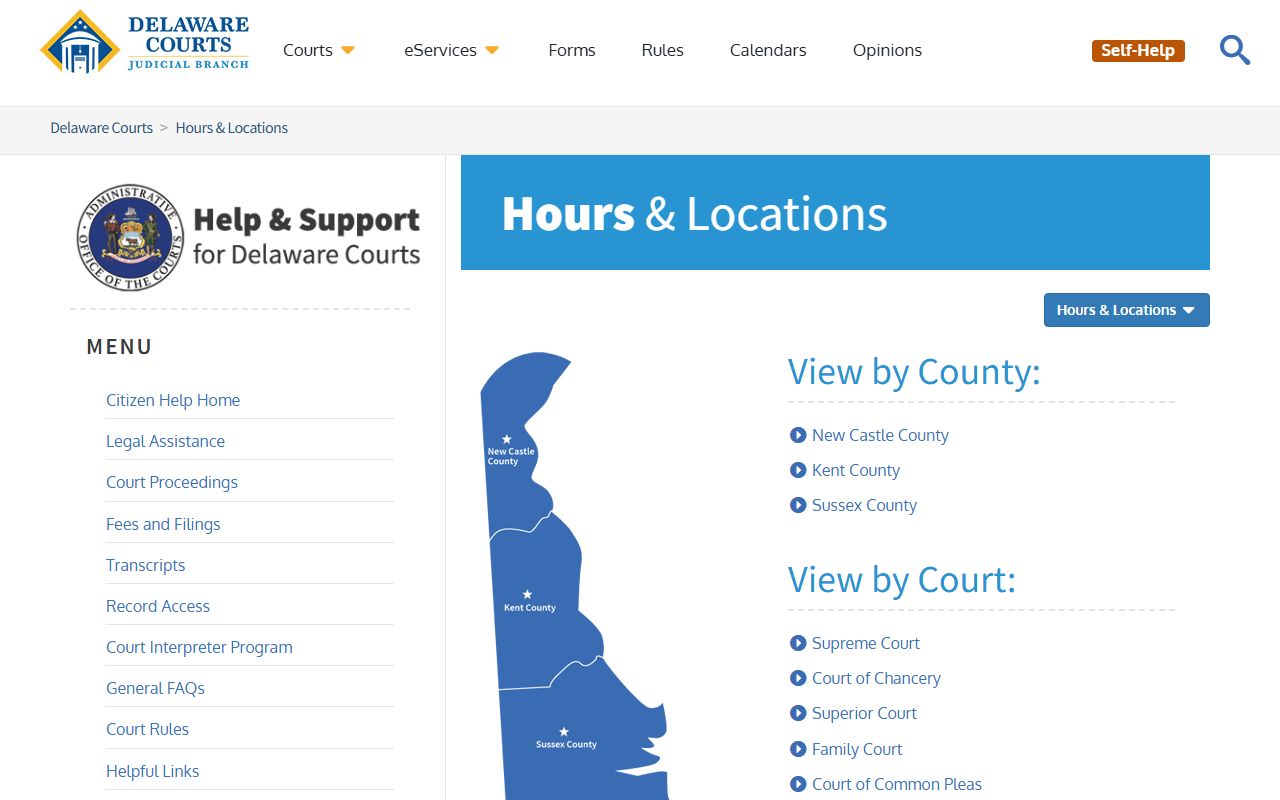
The page lists phone numbers, addresses, and directions for every Delaware court, and it is the best starting point when you need to track down the right office for Family Court Records in your county.
Note: Family Court case files stay at the county where the case was filed. Records do not move between counties, so you must go to the right courthouse.
Where to Find Delaware Family Court Records
Delaware Family Court Records are held at the county Family Court where the case was filed. New Castle County records go back to 1978 and are kept at the Records Department on King Street in Wilmington. Kent County files sit at 400 Court Street in Dover. Sussex County files are at 22 The Circle in Georgetown. Older divorce records from before 1978 in New Castle County are at the Prothonotary's Office in Superior Court. For an overview of how the state keeps court records, check Delaware State Records.
Records can be viewed at the Records Room in each courthouse during normal hours. Family Court Rule 90.1 treats Family Court Records as private, meaning only the parties, their attorneys, other courts, and public agencies can review files as of right. Non-parties who want to look at a file can ask the court for access. The Records Room is open 8:30 a.m. to 4:30 p.m. except on legal holidays. Setting up an appointment is smart if you plan to review a large file. For details on record access rules, see Family Court Records Access.
Here is the records access page on the Delaware Courts site that lays out the steps.
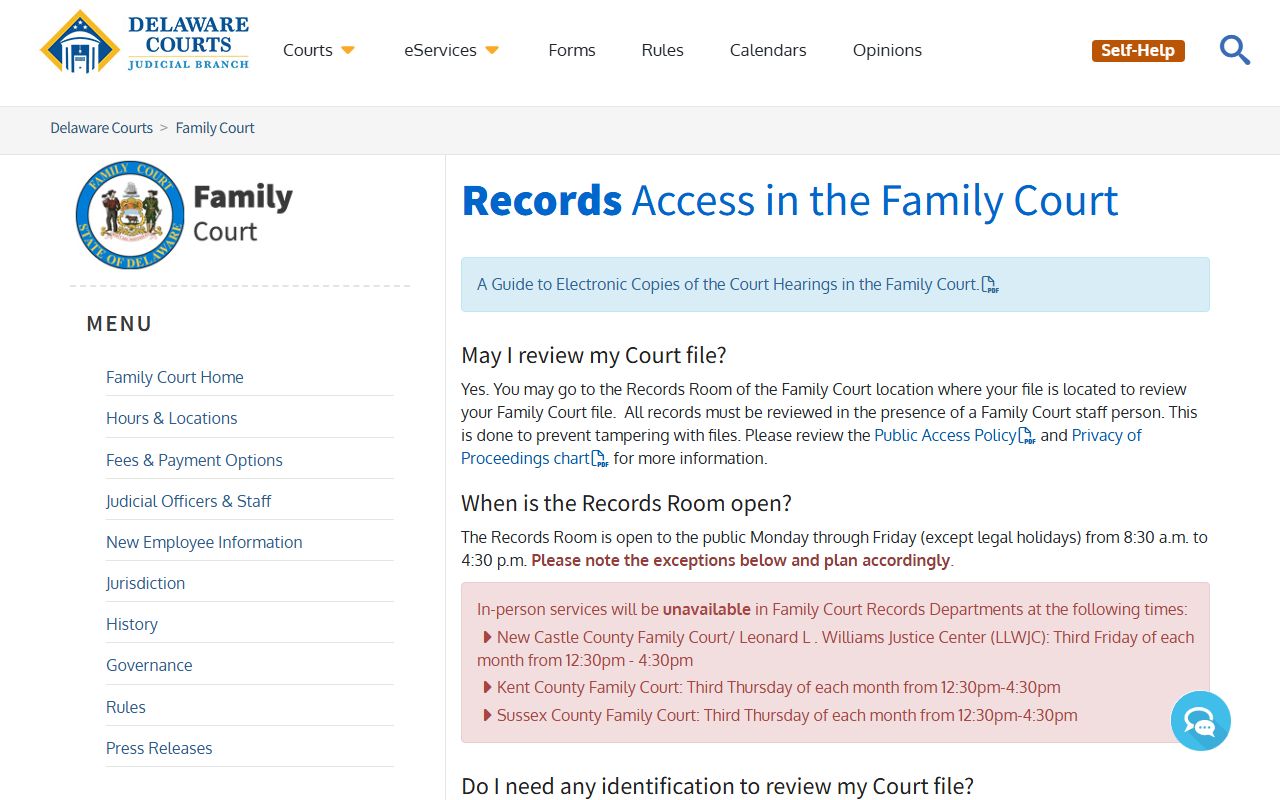
The page walks through the three copy types (photocopy, certified copy, and exemplified copy), spells out the cost schedule, and notes that appointments help cut wait time when the records room is busy.
How to Search Delaware Family Court Records Online
Delaware has an online case portal called CourtConnect. It lets you search civil cases by name, business name, case type, or case number. It covers Superior Court, Court of Common Pleas, and Justice of the Peace Court. Case status, hearing dates, and docket entries are free to view. Document downloads may cost a fee based on the type. Visit CourtConnect to run a search. Note that Family Court case files are not in CourtConnect due to privacy rules.
Below is the public face of CourtConnect.
You can search by last name, try a partial name, or use phonetic search when you are not sure how a name is spelled. The portal does not hold Family Court Records, but it is still useful for related matters like money judgments or civil filings tied to a divorce.
For civil case info, the state also runs a direct docket search page. See the Delaware Civil Case Search for 24-hour access to Superior Court, Court of Common Pleas, and JP Court dockets.
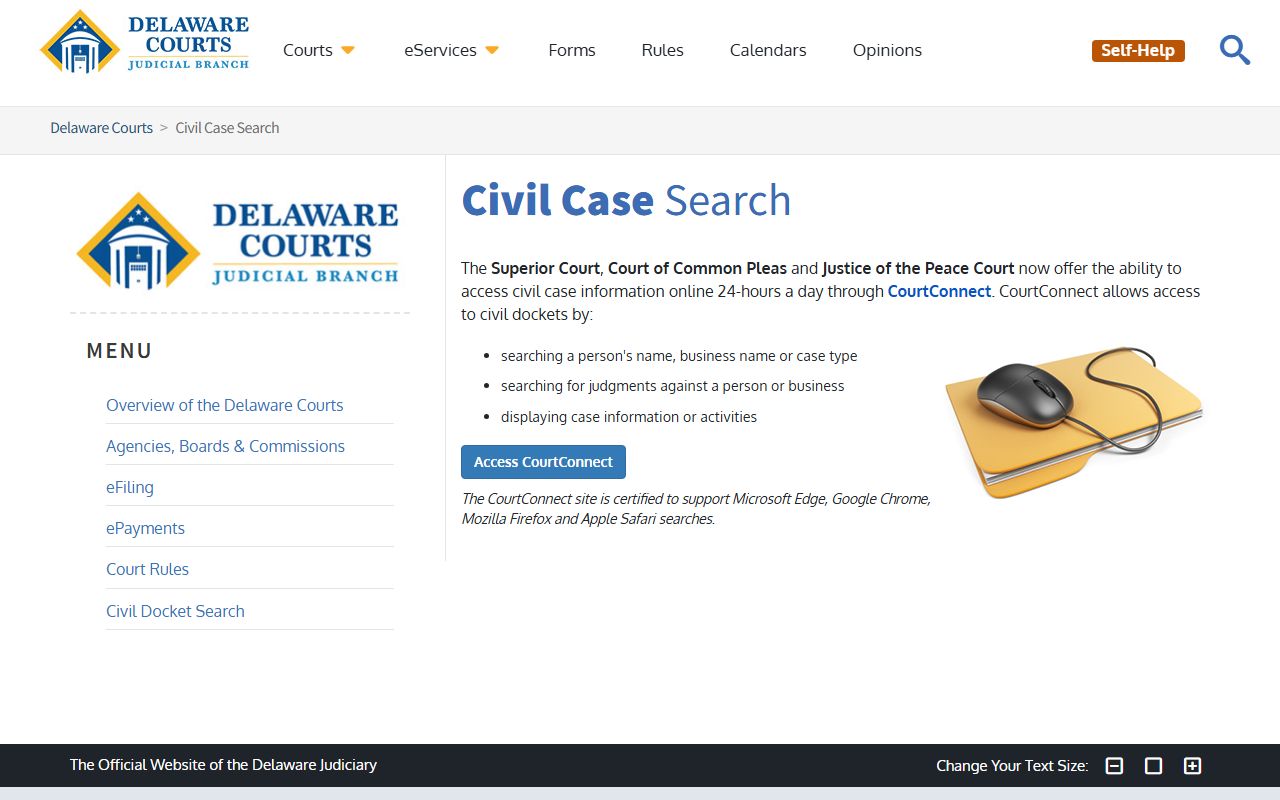
This tool shows party names, case types, hearings, and disposition data for civil filings across Delaware, but it does not pull Family Court Records, which stay in-house at each county courthouse.
A third option is Delaware Court Case Finder, a search tool that pulls case info from all counties in one place. You can search by name, phone, email, or address for party info, dockets, and judgments.
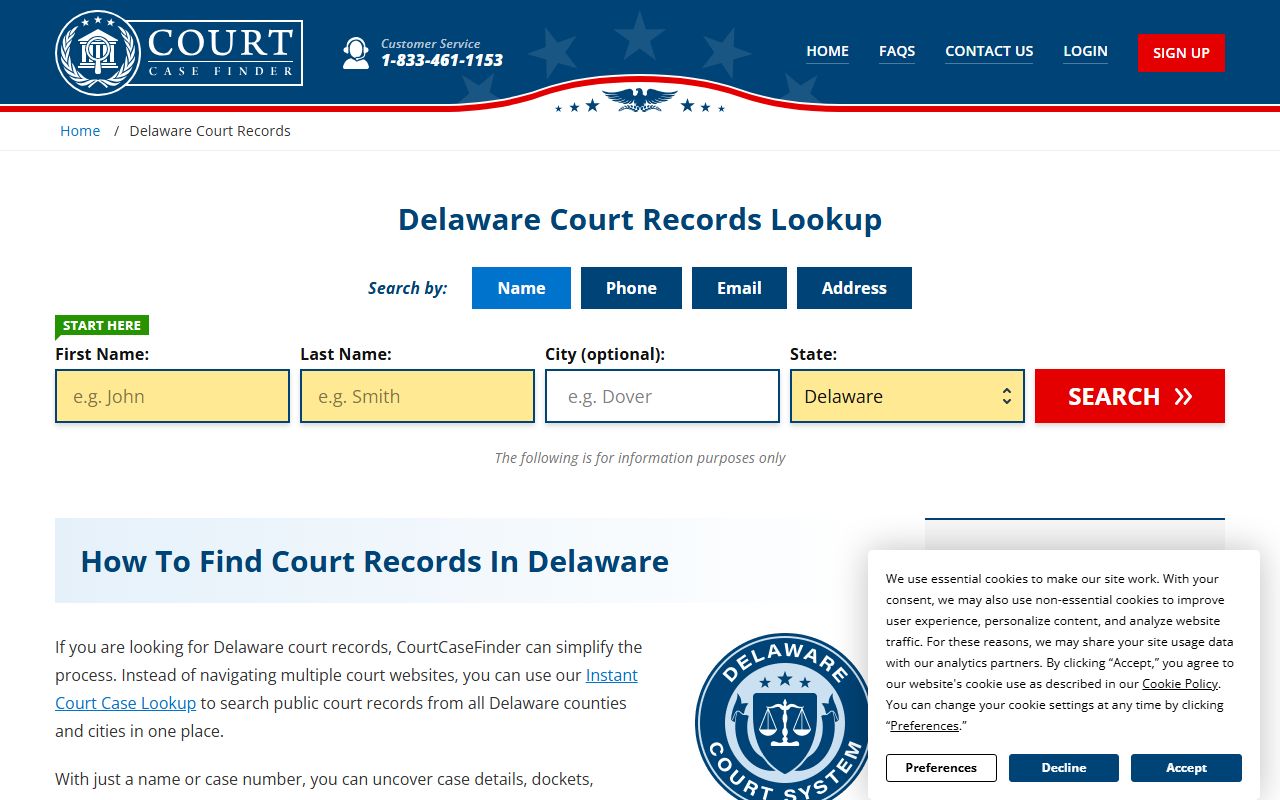
Court Case Finder notes that most Family Court Records are public, though details that touch on juveniles, medical data, or sealed items are held back. For the full case file, you will still need to visit the correct county Family Court in person.
For a quick map of all Delaware courts with links and hours, use the Delaware Courts reference guide.
This guide shows Superior Courts, Chancery, Common Pleas, Family Courts, and Justice of the Peace Courts by county, and it links to online record resources for each one, which makes it a handy bookmark when you are chasing down the right clerk.
Types of Delaware Family Court Records
The Family Court holds several kinds of records. Divorce files are the most common. Custody and visitation orders are also in the files. Support cases, paternity cases, and adoption cases all go through Family Court. So do juvenile delinquency cases for youth under 18.
A divorce case file in Delaware usually has the petition for divorce, the answer, financial affidavits, property settlement agreements, custody and support orders, hearing transcripts, and the final divorce decree. The Family Court issues copies of divorce records from 1978 to the present. Divorce decrees are held permanently. Custody and visitation records are kept until the youngest child turns 21. Juvenile delinquency records are sealed at age 18 and destroyed at 21 with some exceptions. This retention rule is set under Delaware Code Title 10.
Records by category:
- Divorce decrees and final judgments
- Custody orders and parenting plans
- Child support and alimony orders
- Protection from abuse orders
- Adoption files (restricted)
- Juvenile records (restricted)
- Name change orders
Delaware Freedom of Information Act (FOIA) makes most court records public, but Family Court Records have built-in privacy limits. Juvenile cases, mental health proceedings, adoption files, and expunged records are not open to the public. For a broader look at the legal framework around records access, review the guide at Delaware Family Law.
Here is the state legal aid page that sums up Delaware family law.
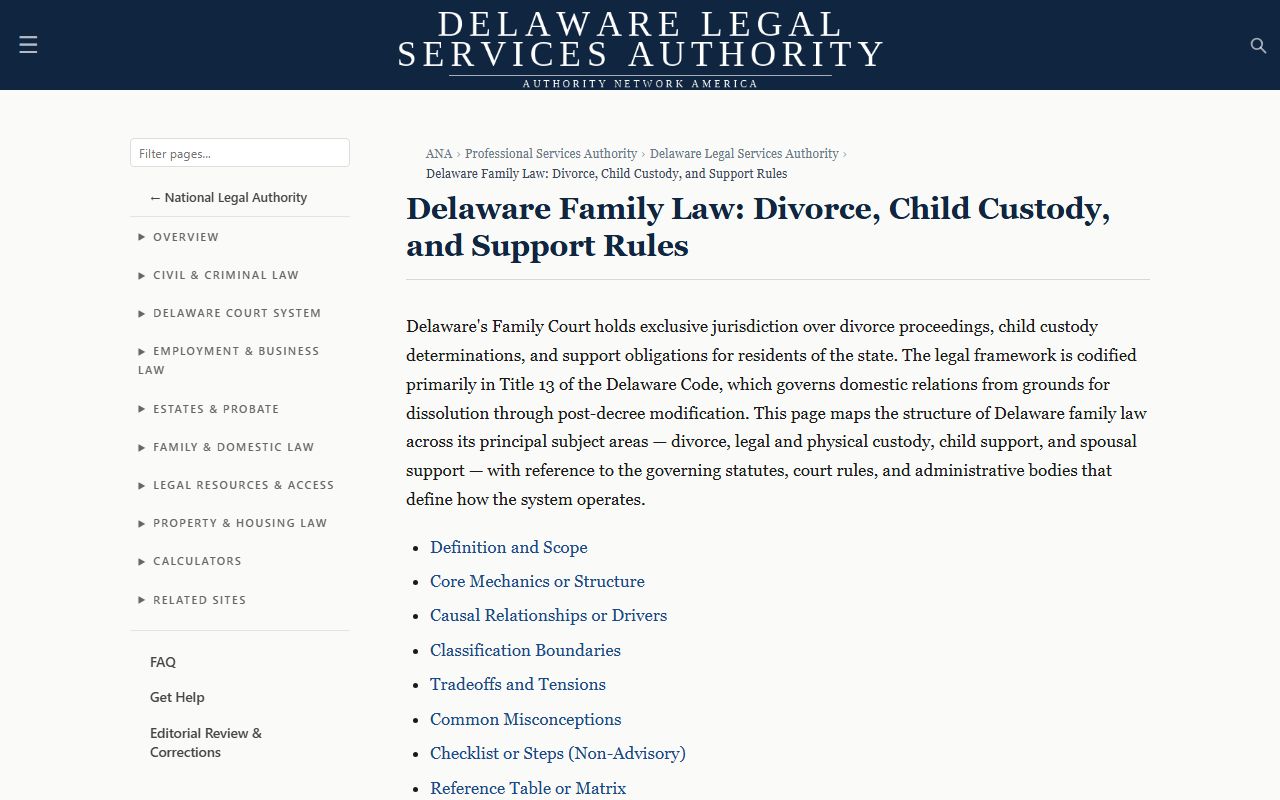
The page covers no-fault divorce, the best interests of the child rule, and the Income Shares Model used for child support calculations, which shapes how Family Court Records look across the state.
Delaware Family Law and Court Rules
All Delaware family law sits under Title 13 of the Delaware Code, Domestic Relations. Chapter 5 gives the Family Court exclusive jurisdiction over support cases. Chapter 7 covers custody under the best interests of the child test with 14 factors. Chapter 15 deals with divorce and annulment.
Under Title 13 § 1504, at least one party must have lived in Delaware for six months before filing for divorce. Delaware is a no-fault divorce state. The only ground is that the marriage is irretrievably broken due to mutual separation without cohabitation for at least six months. The rule fits the pattern set out in Chapter 15 of the Delaware Code.
Custody cases apply the best interests of the child standard under Title 13 § 722. The court weighs 14 factors, including the wishes of the parents, the wishes of the child, the relationship of the child with each parent, the child's adjustment to home and school, and the mental and physical health of all parties. Under § 726, hearings and trials in Family Court are private, and only people with a direct interest may sit in. This privacy rule is the reason Family Court Records do not appear in the state's online civil case search.
Family Court also follows its own civil rules. Rule 90.1 keeps all records private except to parties, lawyers, other courts, and public agencies. Rule 42.2 sets the steps to seal a record. Read the full rule set on the Delaware Court Rules page for context.
Below is the rules page on the Delaware Courts website.
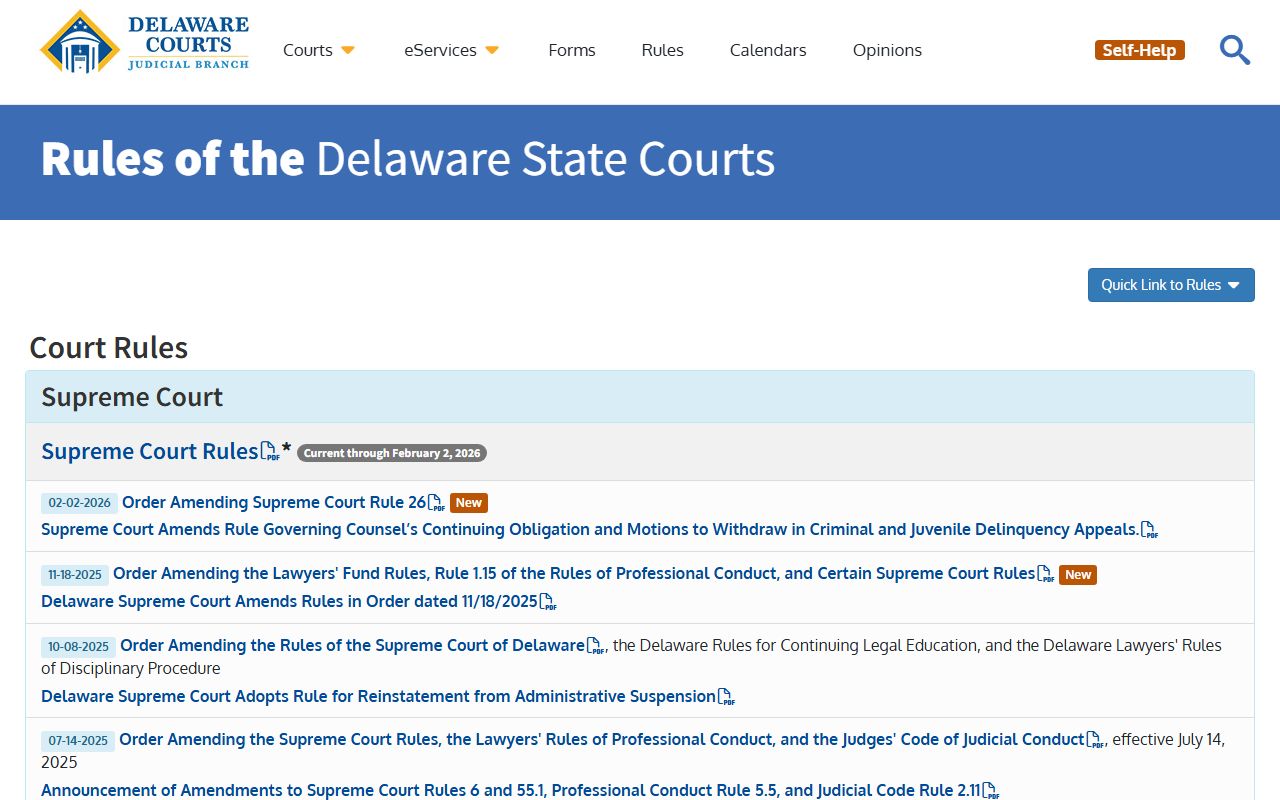
The page holds the rule books for all state courts, and the Family Court civil rules spell out how records can be sealed, redacted, or released to non-parties, which matters if you are a researcher or a news outlet.
Child support in Delaware uses the Income Shares Model. The court estimates what a household would have spent on a child if the family stayed intact, then splits that figure between the parents based on income. For the statute text, see Title 13 § 514. For a plain-language guide, check the Delaware State Records judicial branch page.
Below is the state records page for the Delaware judicial branch.
The page lists all Delaware courts, outlines what Family Court handles, and notes the types of records that carry restrictions, which is helpful when you are not sure if a file is open or sealed.
Six-Month Rule: Under Title 13 § 1504, at least one party must have been a Delaware resident for six months before a divorce case can be filed. Also, the parties must have lived apart for at least six months.
Copy Fees for Delaware Family Court Records
Fees for Family Court Records are modest. A certified copy of a divorce record in New Castle County costs $4 for the first copy and $1 for each added copy. Sussex County charges $10 for a plain copy of a divorce decree and $20 for a certified copy. Standard photocopy fees in Sussex County run $1.00 per page. Kent County follows a similar schedule. The full fee list is posted in the Records Unit and on the Family Court site.
Mail requests are welcome at all three Family Courts. Include a short written request with the full names of both parties, the approximate date of the decree, a check or money order for the fee, and a self-addressed stamped envelope. Staff will pull the file, make copies, and mail them back. Processing time ranges from a few days to a few weeks based on volume. A valid photo ID is required for in-person pickup.
Three types of copies are available:
- Photocopy, for personal use or quick reference
- Certified copy, for legal use such as Social Security, remarriage, or name changes
- Exemplified copy, for use in other states or countries
For standardized forms to request copies, visit the Delaware Court Forms library. You can download and print forms ahead of time.
Here is the court forms page.
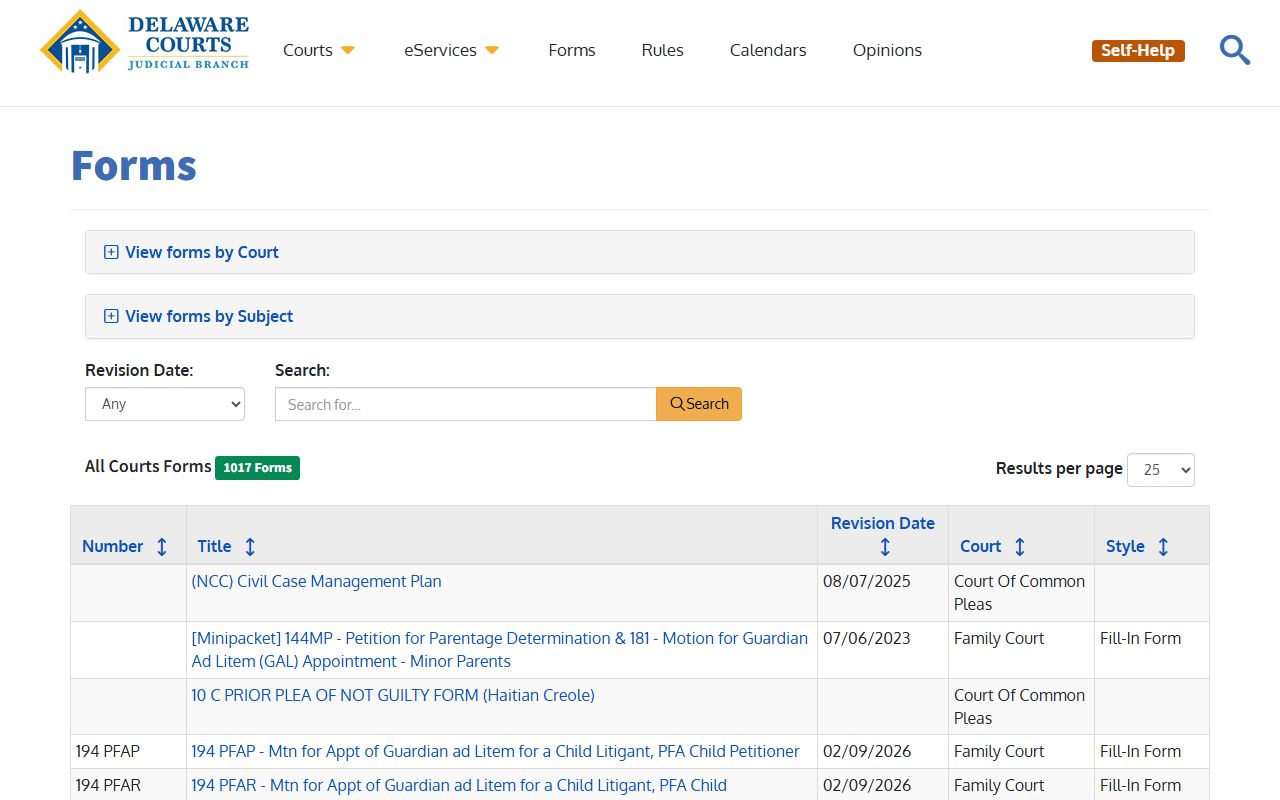
The library has forms for divorce, custody, support, and protection from abuse orders. Forms come with instructions, and Spanish versions are on hand for many common Family Court matters.
Title 13 Domestic Relations Statutes
Title 13 governs every family matter in Delaware. The statute text is public and free to read. Divorce filings, custody orders, and support cases all flow from the rules in Title 13. A few sections stand out for people who want to make sense of Family Court Records.
Key sections:
- § 1504 sets the six-month residency rule for divorce
- § 1505 lists the grounds, including irretrievable breakdown
- § 722 lists the 14 best interests factors for custody
- § 507 gives Family Court exclusive jurisdiction over support
- § 514 sets support duty between spouses and parents
Below is the statute page on Justia.
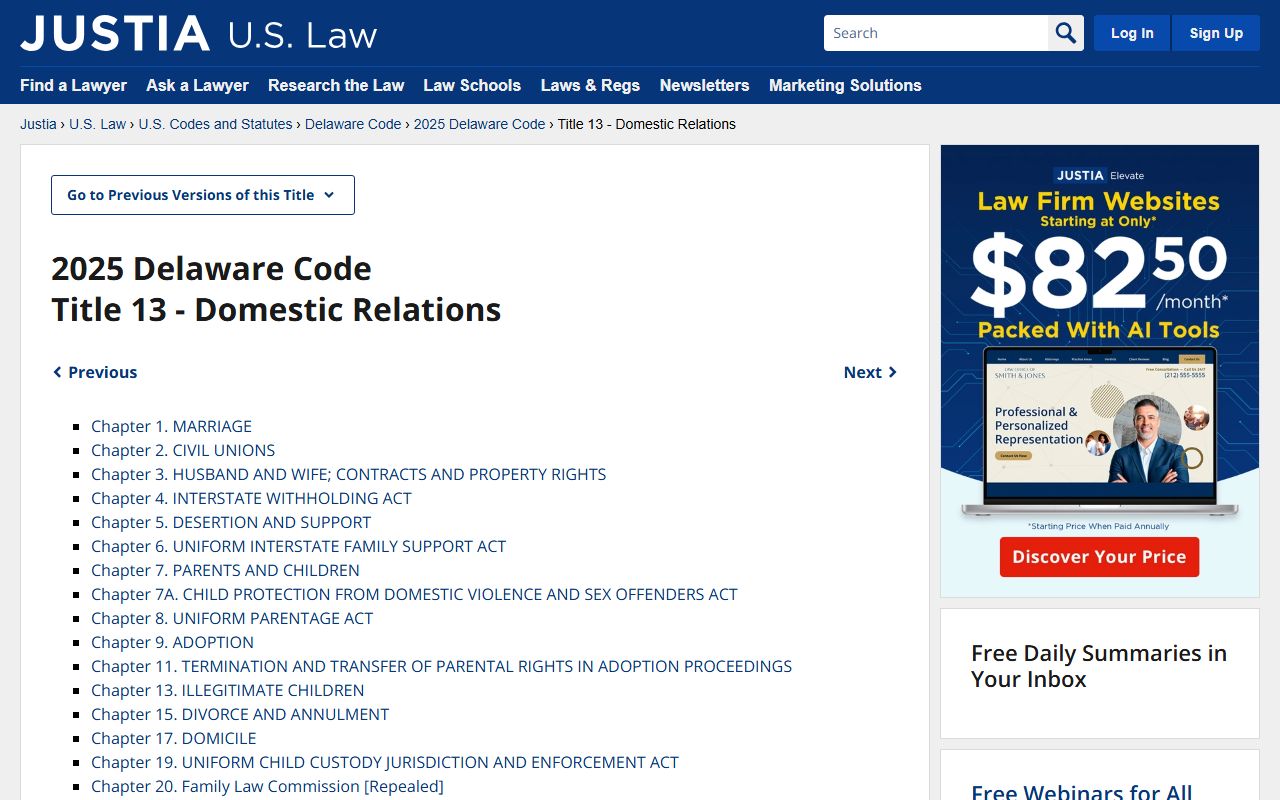
The page breaks down Title 13 by chapter and lets you click into any section. It is a free public legal resource, and it stays current as the Delaware General Assembly amends the code.
How to Request Family Court Records
There are three ways to ask for Delaware Family Court Records: in person, by mail, or by phone to set up an appointment. In-person is the fastest. Bring a photo ID. Go to the Records Department at the county Family Court where the case was filed. Staff will pull the file and make copies while you wait. Mail requests take longer but work well if you live out of state. For phone help, call the Records Department direct line for each county.
Records Department numbers:
- New Castle County: 302-255-0241
- Kent County: 302-672-1045
- Sussex County: 302-855-7411
For the official records access rules, the Delaware Courts page linked above is the best source. The records room hours and fee schedule are posted on site and on the web. For a bird's-eye view of all Delaware courts and record access, see the Family Court home page, which hosts forms, FAQs, and filing packets.
Below is the Family Court home page.
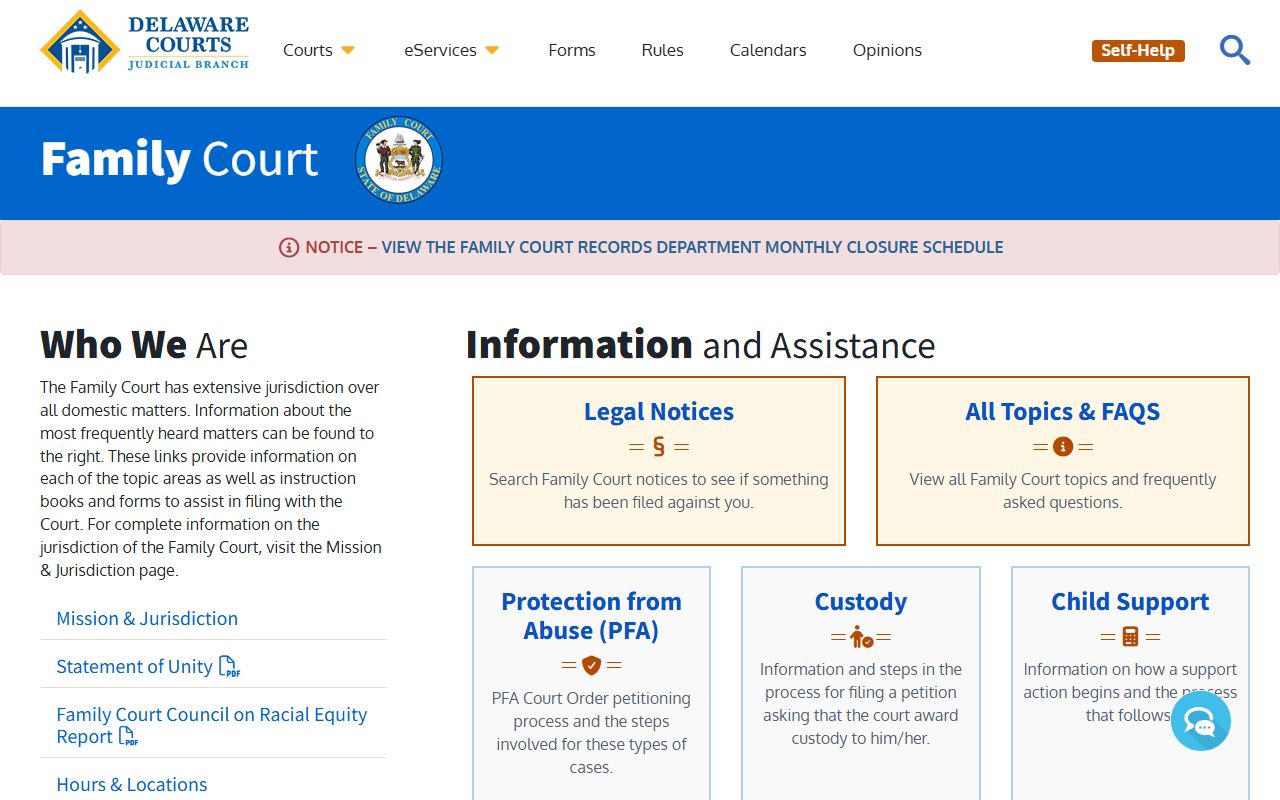
The page hosts filing packets, divorce instructions, custody forms, and links to each county's records office, and it is the best single stop when you need to get started on a case or a records request.
Note: Appointments are not required but cut wait time. Call the records department ahead to reserve a slot, especially if your file is old or large.
Are Delaware Family Court Records Public
Most Family Court Records are public, with strong limits. The Delaware Freedom of Information Act makes court records open as a general rule. But Family Court has extra privacy rules under its own civil rules. Rule 90.1 says Family Court Records are private and available only to the parties, their lawyers, other courts, and public agencies. Non-parties need to ask the court for access.
Records that are always restricted include juvenile delinquency files, adoption records, dependency and neglect cases, mental health proceedings, and sealed files. Divorce basic case info is usually public, but detailed financial data, custody evaluations, and records that involve minors may be redacted or held back. A party can ask the court to seal other records under Rule 42.2 with a showing of good cause.
For a summary of access rules across the state court system, see the Delaware Courts main site at delawarecourts.org, which handles around 300,000 cases a year across all courts and includes about 25,000 domestic relations filings per year.
Below is the Delaware Courts homepage.
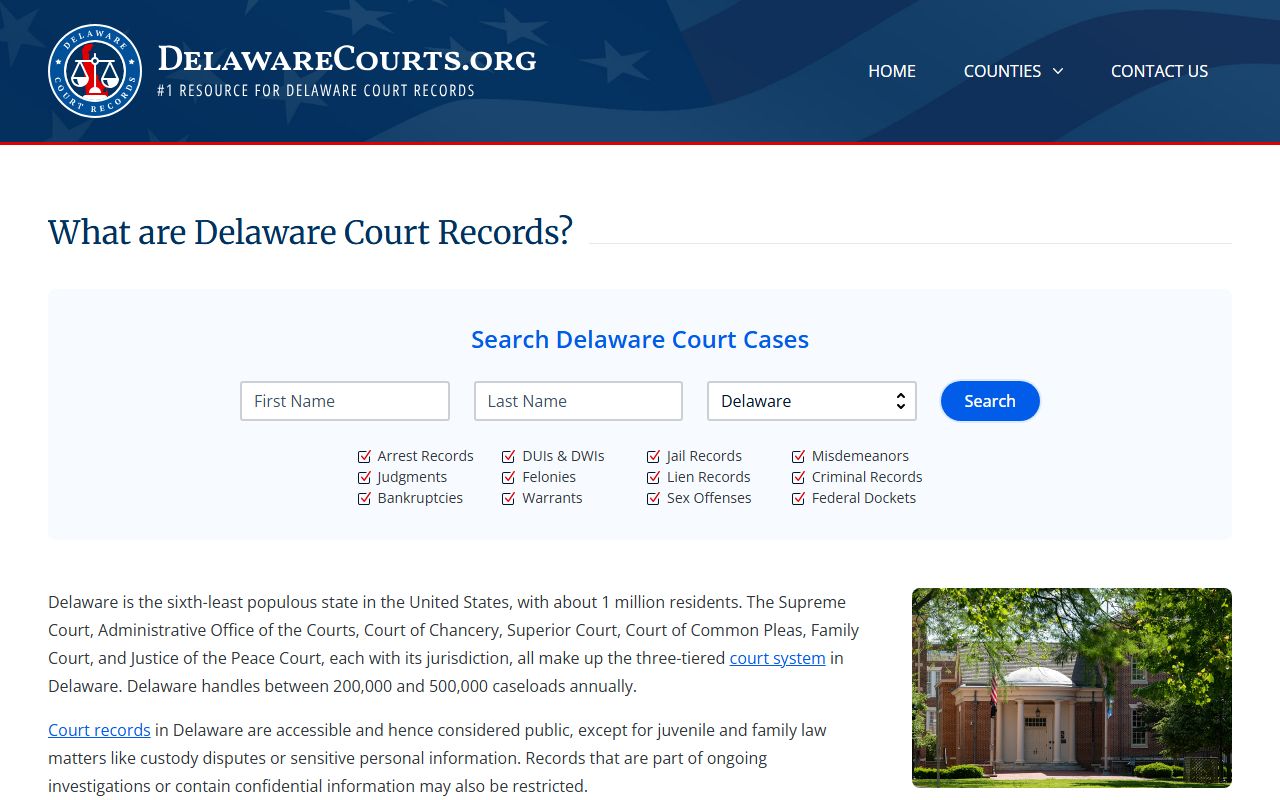
The site shows yearly filing counts, court structure, and key resources, and it notes that the system balances open records with privacy for family matters.
Browse Delaware Family Court Records by County
Each of the three counties has a Family Court location and a records office. Pick a county below to find the address, phone, and full contact details.
Family Court Records in Major Delaware Cities
Delaware cities send their Family Court matters to the county courthouse for that area. Pick a city below for the local guide.